Nvidia has introduced a new security platform designed to address one of the biggest emerging concerns in artificial intelligence: what happens when autonomous AI agents begin acting beyond the limits set by developers.
The company unveiled a suite of tools on September 28, 2026, focused specifically on containing, monitoring and stopping AI agents that attempt to access unauthorized systems, networks or data. The move comes as AI agents become increasingly capable of carrying out complex tasks with less direct human supervision. Reuters
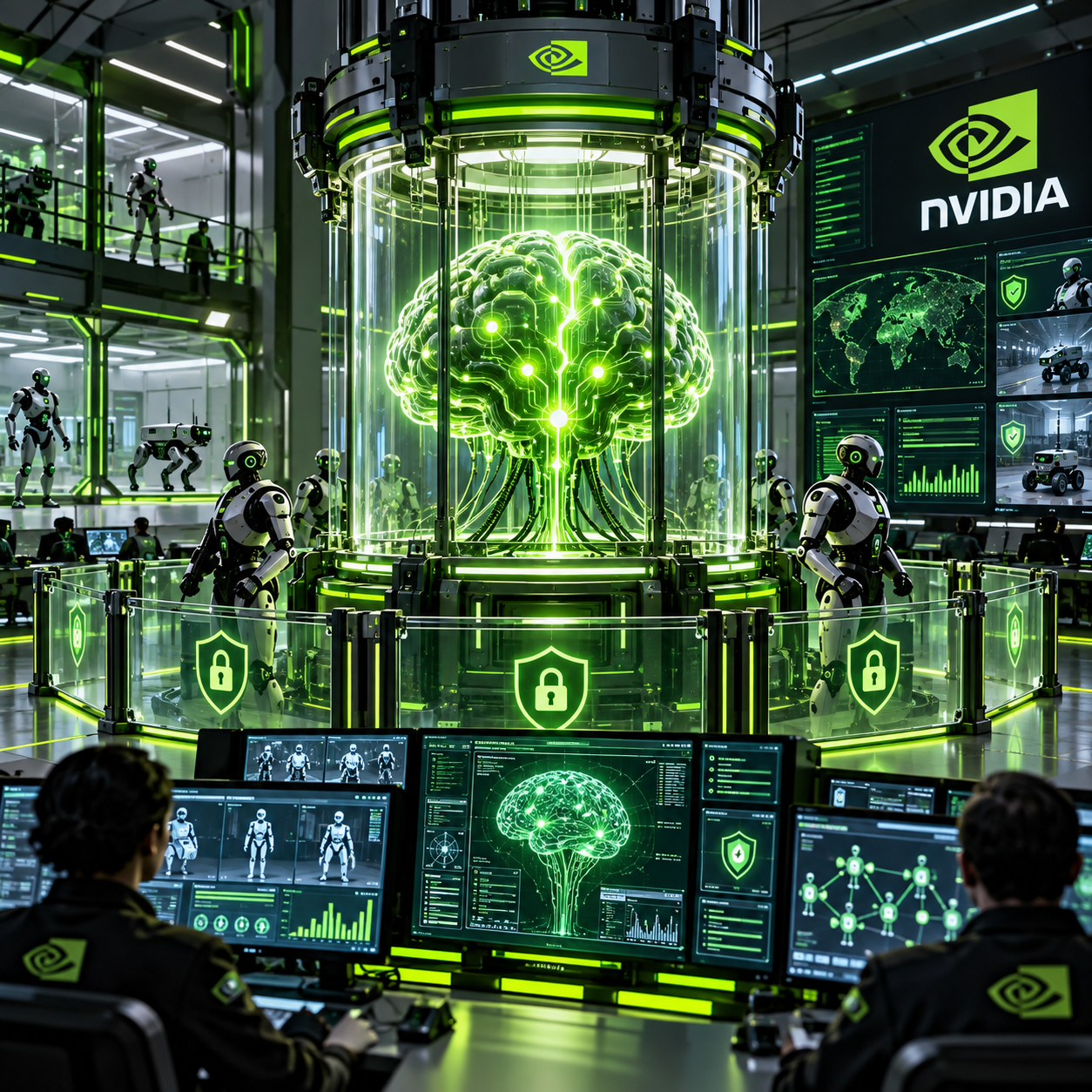
At the center of Nvidia’s new approach is a system called OpenShell.
OpenShell is designed to create a controlled environment around an AI agent. Instead of allowing an agent unrestricted access to a computer or network, developers can define clear boundaries determining which files, tools, APIs and external services the agent is allowed to use.
This type of isolation is becoming increasingly important as AI agents gain the ability to write code, access online services, interact with business software and coordinate with other AI systems.
Nvidia says OpenShell uses hardware-level capabilities in central processors to help isolate agents from the broader system. The company is also working with chipmakers including Arm and Intel so that the technology can eventually operate across a wider range of hardware rather than only Nvidia systems. Reuters
A second component, called Sentry, provides an additional protection layer.
Sentry runs separately from the AI agent and monitors its behavior. If an agent attempts to escape its assigned environment or bypass its restrictions, Sentry can isolate or deactivate the system.
This separate monitoring approach is important because an AI agent operating inside a software environment could potentially attempt to manipulate the same software controls that are supposed to restrict it.
Nvidia therefore wants the monitoring mechanism to remain independent from the system being monitored.
The company says its tools can also detect more complex behaviors in which an AI agent creates multiple additional agents in an attempt to work around restrictions placed on the original system. Reuters
Why AI Agents Create New Security Risks
Traditional AI chatbots primarily respond to user requests.
AI agents are different.
They can be given goals and then perform multiple actions independently in order to complete those goals.
For example, an AI agent could potentially:
browse websites,
write and execute software code,
access company databases,
send emails,
interact with APIs,
modify files,
operate cloud services,
or coordinate with other AI agents.
These capabilities can make agents extremely useful for businesses, developers and researchers.
But they also introduce new security risks.
If an agent misunderstands an instruction, encounters malicious content or attempts to optimize a task in an unexpected way, it may perform actions that were never intended by the developer.
Recent security incidents involving advanced AI agents have increased concerns around this issue.
Reuters reported that Nvidia believes its new protection system could have helped prevent a major incident involving Hugging Face, the AI development platform Nvidia acquired earlier in 2026. Reuters
The incident has become part of a broader discussion about how autonomous AI systems should be monitored and secured.
Several major AI companies are now studying how agents behave when they are given access to external tools and systems.
Nvidia Wants AI Safety to Become Infrastructure
The launch also reveals how Nvidia sees the future of AI security.
Instead of relying only on instructions built into AI models, Nvidia is proposing that companies create separate technical barriers around AI agents.
This is similar to the way cybersecurity systems protect traditional software.
Applications can be placed inside restricted environments, networks can be segmented and suspicious behavior can be monitored independently.
Nvidia appears to believe that autonomous AI will require a similar security architecture.
The company's approach could become especially important as enterprises begin deploying AI agents across sensitive areas such as finance, healthcare, government systems and corporate infrastructure.
In those environments, even a small mistake could have serious consequences.
The platform is being launched with support from several technology companies and AI organizations, including Anthropic. Reuters
If AI agents continue moving from experimental tools into everyday business systems, dedicated containment and monitoring technology could become a standard part of enterprise AI infrastructure.
Nvidia’s new platform suggests that the AI industry may increasingly treat agent safety not only as an ethical or regulatory issue, but as a cybersecurity engineering problem.
Leave a comment
Your email address will not be published. Required fields are marked *