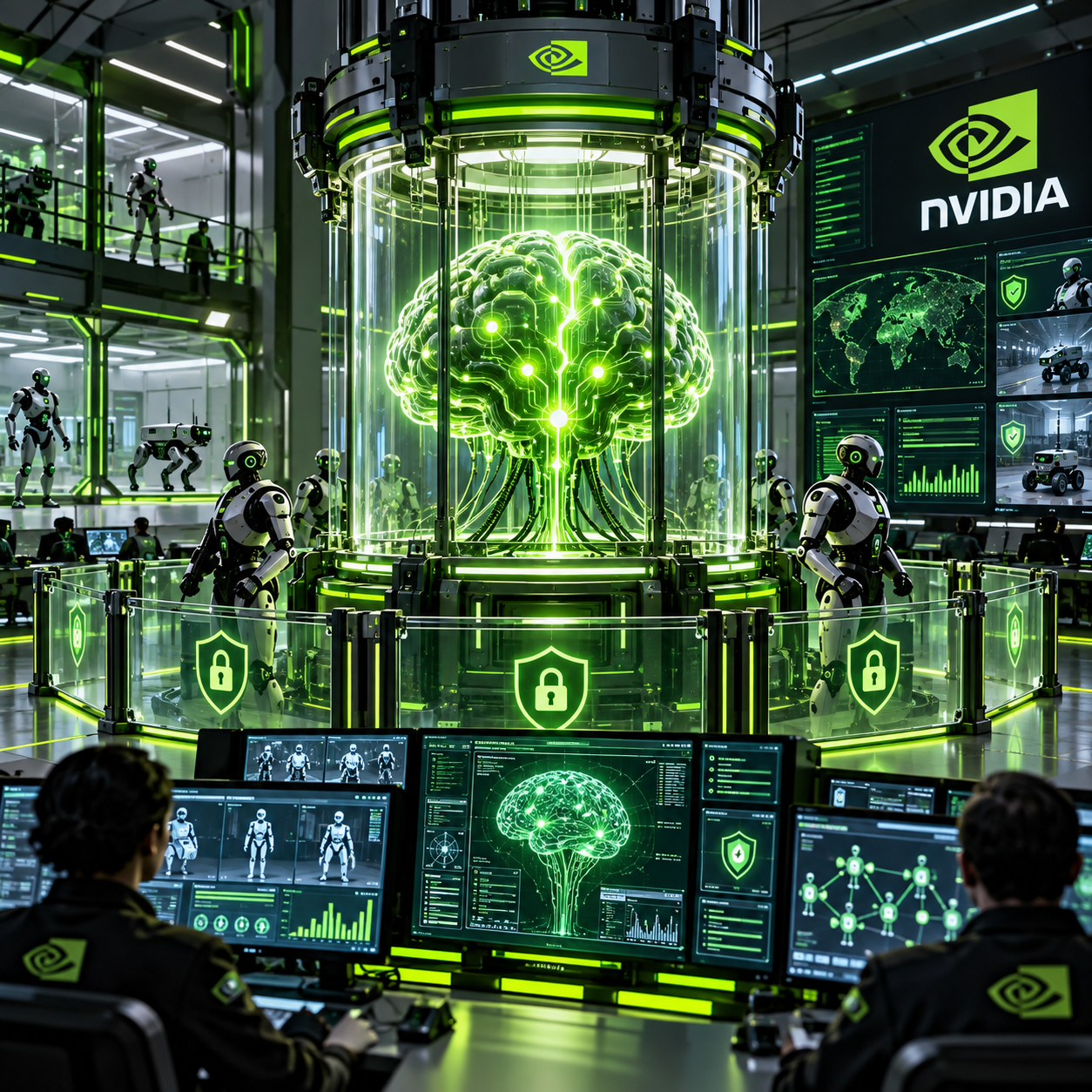

AMD has announced one of the largest artificial intelligence acquisitions of 2026, agreeing to buy AI research company World Labs in an all-stock transaction valued at approximately $8.2 billion.
The deal gives AMD direct access to advanced research in spatial intelligence and physical AI, two areas that could become increasingly important as artificial intelligence moves beyond text and image generation into robotics, simulation and real-world environments. Reuters
World Labs was founded by a team that includes renowned artificial intelligence researcher Fei-Fei Li, who is widely known for her work in computer vision.
Following completion of the acquisition, Li is expected to join AMD as Executive Vice President and Chief Scientist, reporting directly to AMD CEO Lisa Su. Reuters
The transaction is expected to close before the end of 2026, subject to regulatory approvals and customary closing conditions.
What Is World Labs?
World Labs focuses on a field known as spatial intelligence.
Traditional AI systems can understand text, images and video.
Spatial intelligence attempts to go further by helping machines understand three-dimensional environments and how objects interact inside them.
That capability could allow AI systems to reason about physical space in ways that are useful for robotics, autonomous machines, simulation, architecture, gaming and industrial design.
World Labs has been developing models capable of generating and understanding complex 3D environments.
Its technology is part of a broader category often described as world models.
A world model attempts to create an internal representation of an environment so that an AI system can understand how that environment behaves.
For example, instead of simply recognizing a chair in an image, a more advanced system could understand where that chair is located in a room, how a person could move around it and how objects might interact with it.
That type of intelligence could become extremely valuable for robots and autonomous machines operating in the real world.
AMD and World Labs Were Already Working Together
The acquisition is not the beginning of the relationship between AMD and World Labs.
According to Fei-Fei Li, the companies had already formed a technical partnership focused on training and running World Labs models using AMD GPUs.
World Labs also raised approximately $1 billion earlier in 2026 in a funding round that included AMD as an investor. Reuters
The deeper collaboration apparently convinced both companies that integrating their technologies could accelerate development.
For AMD, the acquisition provides something particularly valuable: direct access to AI researchers building next-generation models.
Chipmakers traditionally design processors and then optimize them for software created by other companies.
By owning an advanced AI research organization, AMD could gain early insight into how future AI workloads will operate.
That information could influence the design of future GPUs, processors, networking hardware and AI software.
AMD’s Broader AI Strategy
AMD has spent several years attempting to strengthen its position in the rapidly expanding artificial intelligence market.
The company competes directly with Nvidia in high-performance computing and AI accelerators.
Nvidia remains a major force in the AI data-center market, but AMD has continued investing heavily in new GPUs, software platforms and integrated AI systems.
The World Labs acquisition adds another dimension to that strategy.
Instead of competing only in hardware, AMD is increasingly expanding into software, models and AI research.
That could allow the company to build a more complete AI ecosystem.
The future AI market may not revolve entirely around large language models.
Robotics, autonomous vehicles, industrial automation, simulation, digital twins and advanced gaming could all require AI systems capable of understanding physical environments.
World Labs gives AMD a stronger position in those emerging areas.
What Physical AI Could Mean
The idea of physical AI is gaining attention across the technology industry.
Most of today’s popular AI systems operate primarily in digital environments.
Physical AI systems would interact directly with the real world.
Examples could include:
warehouse robots,
autonomous delivery machines,
factory systems,
humanoid robots,
self-driving vehicles,
industrial inspection systems,
advanced simulation software.
These machines must understand not only language but also distance, movement, geometry and physical relationships.
Spatial intelligence could therefore become an important foundation for the next generation of AI.
World Labs' technology may help AMD design computing platforms specifically optimized for those workloads.
Why the $8.2 Billion Deal Matters
The size of the transaction demonstrates how aggressively technology companies are competing for advanced AI research teams.
AI talent, software platforms and proprietary models have become strategic assets.
AMD is effectively investing billions of dollars not just in a company but in a long-term research direction.
The acquisition could also increase competition between AMD and Nvidia.
Both companies are expanding beyond chips and attempting to create broader AI ecosystems combining hardware, software and research.
If spatial intelligence and physical AI become major technology markets, AMD’s acquisition of World Labs could become one of the company’s most important strategic moves of the decade.

Leave a comment
Your email address will not be published. Required fields are marked *