
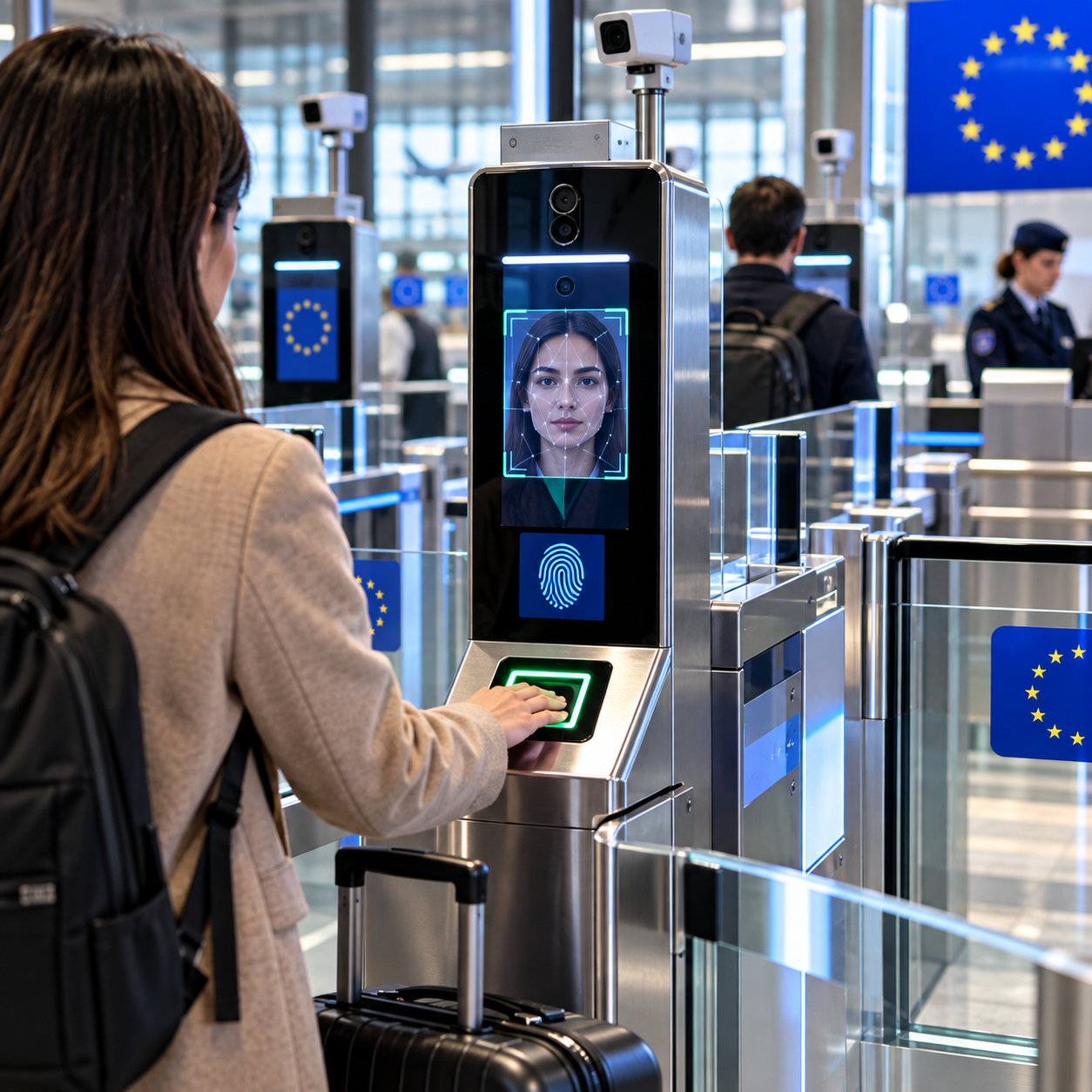
Travel to Europe has changed significantly in 2026 following the full rollout of the European Union’s Entry/Exit System.
The EES became fully operational across external Schengen border crossing points on April 10, 2026. Since then, the system has registered more than 145 million entries and exits, according to the European Commission. Migration and Home Affairs
The system applies primarily to non-EU nationals visiting the Schengen area for short stays of up to 90 days within any 180-day period.
Instead of relying only on passport stamps, border authorities can now digitally record travelers’ passport information, facial images and fingerprints.
The goal is to improve border security, identify overstays more accurately and modernize the way entries and exits are recorded.
Not everyone is registered through EES.
Citizens of EU countries, as well as nationals of Iceland, Liechtenstein, Norway and Switzerland, are among those exempt from EES registration. Certain holders of long-stay visas and residence permits also follow different procedures. Migration and Home Affairs
The EES is separate from ETIAS.
EES operates at the border, while ETIAS will require eligible visa-exempt travelers to obtain a travel authorization before departure once the system launches. Migration and Home Affairs
For travelers planning trips to France, Spain, Germany, Italy and other Schengen destinations, understanding the difference between the two systems is becoming increasingly important.
Leave a comment
Your email address will not be published. Required fields are marked *