
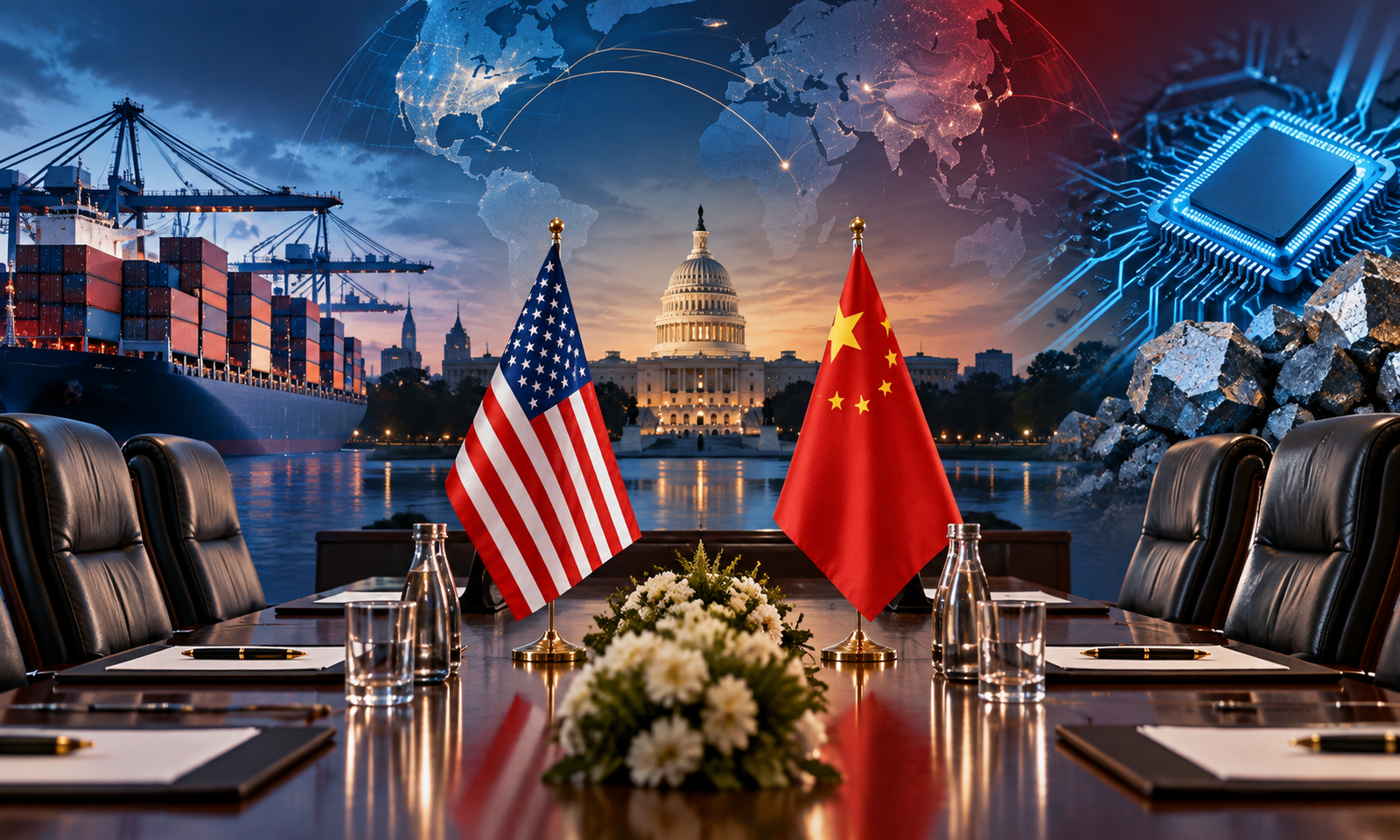
U.S. President Donald Trump and Chinese President Xi Jinping are preparing for one of the most closely watched diplomatic meetings of 2026.
Xi is scheduled to pay a state visit to the United States from September 23 to 25, at Trump’s invitation. The White House says the main state-visit events will take place on Thursday, September 24, including an official arrival ceremony and meetings in Washington. China’s Foreign Ministry has also confirmed the visit and said the two leaders will discuss major issues involving bilateral relations as well as international peace and development.
The meeting comes at a time when the United States and China remain deeply connected economically while competing in areas such as artificial intelligence, semiconductors, critical minerals, manufacturing and strategic influence.
Here are the major issues surrounding the Trump-Xi summit.
1. Trade Remains at the Center of U.S.-China Relations
Trade is expected to be one of the summit’s central topics.
The two countries have spent years using tariffs, export controls and other economic measures as part of a broader strategic rivalry.
In May 2026, after an earlier Trump-Xi meeting in Beijing, the White House said the two governments agreed to build a more stable economic relationship and establish mechanisms to manage parts of bilateral trade and investment.
More recent talks between U.S. Treasury Secretary Scott Bessent and Chinese Vice Premier He Lifeng included discussions over possible tariff reductions on selected non-sensitive goods. Reuters reported that the discussions were intended partly to prepare the ground for the September summit.
That means the September meeting is taking place against a backdrop of both cooperation and continuing economic tension.
2. Critical Minerals and Rare Earths Are a Strategic Issue
Another major subject is the supply of rare earths and other critical minerals.
These materials are essential for products and industries including:
- Smartphones
- Electric vehicles
- Batteries
- Semiconductors
- Aerospace systems
- Telecommunications
- Defense technologies
Reuters reports that China remains dominant in rare-earth mining, refining and processing, giving Beijing significant influence over global supply chains. The issue has become particularly important for Washington as the United States tries to diversify its sources of strategic minerals.
U.S. officials have said trade, rare-earth supply and AI are among the issues expected to be discussed during Xi’s visit.
For companies around the world, this matters because disruptions in critical-mineral supply can affect manufacturing far beyond China and the United States.
3. Artificial Intelligence Has Entered High-Level Diplomacy
Artificial intelligence has become another major part of U.S.-China relations.
Both countries are investing heavily in advanced AI models, semiconductors and computing infrastructure.
But the conversation is increasingly moving beyond competition.
On September 20, U.S. and Chinese economic officials discussed a possible bilateral AI safety dialogue. The U.S. proposed a notification mechanism that could allow the two countries to share information about major AI-related incidents with national-security implications. The proposal is expected to be considered by Trump and Xi, although China had not publicly committed to it at the time of reporting.
AI competition remains intense, however.
Reuters reports that the two countries continue to disagree over access to advanced chips, technology controls and the governance of powerful AI systems.
That makes AI one of the clearest examples of an area where Washington and Beijing are simultaneously competitors and potential partners.
4. The Two Economies Remain Deeply Connected
Despite strategic competition, financial ties between the United States and China remain substantial.
Reuters reported that U.S. banks continue to participate in financing Chinese technology companies while Chinese investors maintain significant exposure to U.S. semiconductor and technology firms.
This creates a complicated relationship.
Both governments want greater control over technologies they consider strategically important, yet businesses and investors continue to benefit from cross-border capital and trade.
The tension between economic integration and strategic competition is one of the defining features of the U.S.-China relationship.
5. Taiwan Remains One of the Most Sensitive Issues
Taiwan is expected to remain a major point of disagreement.
Beijing considers Taiwan part of China and strongly opposes U.S. arms sales to the island.
Reuters reported on September 22 that Xi is expected to press Trump on the issue of U.S. arms sales to Taiwan during the Washington talks. The United States, meanwhile, continues to emphasize peace and stability across the Taiwan Strait and maintains support for Taiwan’s ability to defend itself under U.S. law.
Because both sides consider the issue strategically important, Taiwan will remain a key test of how effectively Washington and Beijing can manage their disagreements.
6. Regional and Global Security Could Also Be Discussed
The meeting comes amid wider international tensions.
The United States and China have different interests and relationships across the Middle East, Asia and other regions, but both have an interest in avoiding major disruptions to global trade and energy flows.
China’s Foreign Ministry says Trump and Xi will discuss issues concerning world peace and development, although it has not publicly listed every topic expected to be covered.
The White House previously said the two leaders had discussed Iran and the Strait of Hormuz during their May meeting in Beijing.
7. Technology and Business Will Have a Major Role
The summit also has an important business dimension.
U.S. officials told Reuters that senior technology executives are expected to attend events connected to the state visit, while trade, AI and rare-earth supply will be among the main topics surrounding the discussions.
That reflects how closely diplomacy is now connected to industries such as:
Artificial intelligence
Semiconductor manufacturing
Electric vehicles
Batteries
Cloud computing
Advanced manufacturing
Decisions made by Washington and Beijing can therefore have immediate consequences for global companies and investors.
Why the Trump-Xi Summit Matters
The United States and China are the world’s two largest national economies.
Changes in their relationship can affect:
global trade, technology markets, manufacturing, investment, supply chains and financial markets.
Tariff decisions can influence consumer prices.
Restrictions on semiconductors can reshape the technology sector.
Rare-earth policies can affect manufacturers worldwide.
And tensions over Taiwan can influence security calculations across the Asia-Pacific region.
For that reason, the September meeting is being watched not only as a political event, but also as a major economic and technology story.
What Happens Next?
Xi’s state visit is scheduled for September 23 to 25, with the main White House events planned for September 24.
The clearest indication of whether the summit produces new agreements, limited progress or continuing disagreement will come from the official statements released by Washington and Beijing after the meeting.
SMONE will continue following the Trump-Xi summit and the major developments in U.S.-China trade, technology and international relations.
Leave a comment
Your email address will not be published. Required fields are marked *

