
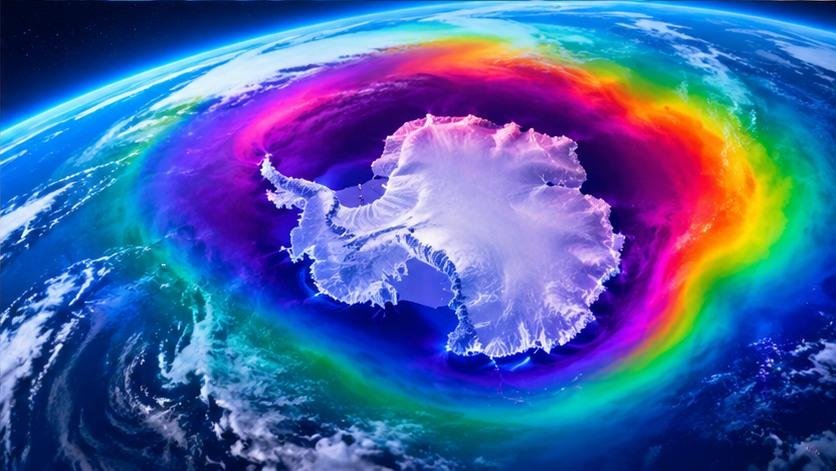
The Antarctic ozone hole becameunusually large during 2026, ranking seventh by area in 48 years ofmonitoring, according to a NASA Earth Observatory report publishedNovember 9. The finding points to the role of seasonal atmosphericconditions even as scientists continue to observe longer-term evidenceof ozone-layer recovery.
How large was the 2026 ozonehole?
NASA reported that an unusually strong Antarctic polarvortex created favorable conditions for ozone depletion across a broadarea. The ozone hole reached its annual maximum extent on September18. Although the depleted region was expansive, its minimum ozoneconcentrations were not as extreme as in some earlieryears.
What the term ozone hole means
The term does notdescribe an empty opening in the atmosphere. Scientists generally usea threshold of 220 Dobson units, a measure of the total amount ofozone in a column of air, to identify the region of substantial ozonethinning. Stratospheric ozone absorbs harmful ultraviolet radiationthat otherwise can damage living tissue.
Why one large yeardoes not erase recovery
Changes in temperature, winds and thepolar vortex can cause major year-to-year swings. The long-runningphaseout of many ozone-depleting chemicals under internationalagreements remains an important factor in the expected multi-decaderecovery of the ozone layer. A single large seasonal hole does not, byitself, overturn that longer-term trend.
The illustrationaccompanying this article is an artistic visualization, not NASA’sobservational ozone map. Readers seeking actual measurements shouldconsult the official NASA report.
Source
Readthe original report.
Featured image: AI-generatededitorial illustration bySMONE.
Sources:

Leave a comment
Your email address will not be published. Required fields are marked *